
My own, personal interest in off-grid living began in New York during the great power outage of 2003. Here is an excerpt from Chapter Two of my book, Off the Grid: Inside the Movement for More Space, Less Government, and True Independence in Modern America. It describes the building of the grid, and concludes that if the grid did not exist there would no longer be any need to invent it. This is just the first part of the chapter, but I hope the information in the full chapter paves the way for a serious debate about the so-called Smart Grid. Locally distributed energy production is the best way forward- energy produced at the point of consumption.
BOOK EXCERPT:CHAPTER 2: How the Grid Was Won
On August 14, 2003, I was in New York, making a documentary for PBS’s Frontline. As I headed for the airport that day, I noticed bewildered groups standing at bus stops or walking in their business suits across the bridges.
There was a power outage across the city, I learned. No computers, no lights, no air-conditioning…I was one of fifty million affected across the North-eastern part of the United States….
On day one of the blackout the electricity industry went into high gear to deal with the situation. At the headquarters of the Edison Electrical Institute, the industry’s lobbying organization in Washington, D.C., executives realized immediately that they had a heaven-sent opportunity to set the terms of the debate.
Tom Kuhn, president of EEI, went on Larry King Live within hours and demanded that Congress provide “additional incentives to build infrastructure investment.”
The same day, David K. Owens, EEI’s executive vice president, told the Washington Post that the “transmission infrastructure needs to be strengthened.” The outage was due to the huge increase in the shipment of power across state lines, the Post reported. It failed to mention that this increase was one the EEI had lobbied for. The deregulation of the $400 billion-a-year industry had created phenomena such as Enron and also permitted non-utility companies to build power stations, but there was no corresponding incentive to beef up transmission lines.
Tom Kuhn, president of EEI, went on Larry King Live within hours and demanded that Congress provide “additional incentives to build infrastructure investment.”
The same day, David K. Owens, EEI’s executive vice president, told the Washington Post that the “transmission infrastructure needs to be strengthened.” The outage was due to the huge increase in the shipment of power across state lines, the Post reported. It failed to mention that this increase was one the EEI had lobbied for. The deregulation of the $400 billion-a-year industry had created phenomena such as Enron and also permitted non-utility companies to build power stations, but there was no corresponding incentive to beef up transmission lines.
Strongly supported by EEI, Senator J. Bennett Johnston (D-LA) had coauthored the Energy Policy Act of 1992, weakening the law restraining utility companies from engaging in other forms of business. Newer companies had taken advantage of the 1992 act to increase power generation, and the industry had left the lines to look after themselves. Now the utilities were going to blame the government and demand more money.
Advocates of utilities deregulation had always intended the process to lead to price cuts, just as it had in the phone and airline industries. Nothing of the sort happened. Deregulation failed partly because the legislation was framed so that no entity was in charge of overseeing the maintenance of the grid. This situation suited the utilities rather well and led directly to the 2003 blackout.
The next morning Tom Kuhn was back on ABC’s Good Morning America answering a question from Diane Sawyer about possible terrorist attacks. “The best, the best defense against cyberterrorism or terrorism in general is to have a robust transmission system,” the EEI president solemnly assured her. “A lot of people have mentioned how important it is for us to enhance the transmission system. We have the most reliable system in the world, but I think additional investment, [as] I’ve testified many times, is greatly needed.” (Investment by the government, that is, rather than power company shareholders.) Simultaneously, another EEI spokesman, Bill Brier, was putting out a more conciliatory line, one that would eventually prevail in legislation. The Institute recognized the utility companies’ obligation to keep the electricity flowing, he told the Boston Globe, and “still favors deregulation, but does support legislation that impose[s] mandatory rules on power companies to fulfill their obligations on the energy grid.” These reliability rules were enacted in 2005, and with million-dollar fines looming over them, the utility companies are now improving the reliability of the network.
But they want us to pay for it. And the basic problems are still there. Of the energy used to generate electricity (in fossil fuel or nuclear power plants), only thirty-one percent actually makes it all the way to homes, offices, and factories. Part is lost in the process of producing the electricity, and the rest as it whizzes around the country along the power lines. When this loss of
power is added to the inefficiencies of older appliances and factories that consume electricity, usable energy can drop to as low as twelve percent. The fact that we now have a hugely inefficient production and distribution process, not to mention grotesque rates of energy consumption, suggests that this ramshackle system probably should never have been invented in the first
place.
Two days after the blackout, as normal service was gradually restored, the EEI was telling the New York Times, “Right now we have a highway to transmit power. We need a superhighway.”
Yet another EEI spinner, Jim Owen, went on NPR radio. “We’ve been saying for some time that we do need to expand and upgrade our transmission capacity in most parts of the country,” he told them, “basically to meet what is an everincreasing demand for electric power.”
But they want us to pay for it. And the basic problems are still there. Of the energy used to generate electricity (in fossil fuel or nuclear power plants), only thirty-one percent actually makes it all the way to homes, offices, and factories. Part is lost in the process of producing the electricity, and the rest as it whizzes around the country along the power lines. When this loss of
power is added to the inefficiencies of older appliances and factories that consume electricity, usable energy can drop to as low as twelve percent. The fact that we now have a hugely inefficient production and distribution process, not to mention grotesque rates of energy consumption, suggests that this ramshackle system probably should never have been invented in the first
place.
Two days after the blackout, as normal service was gradually restored, the EEI was telling the New York Times, “Right now we have a highway to transmit power. We need a superhighway.”
Yet another EEI spinner, Jim Owen, went on NPR radio. “We’ve been saying for some time that we do need to expand and upgrade our transmission capacity in most parts of the country,” he told them, “basically to meet what is an everincreasing demand for electric power.”
But why should there be an “ever-increasing demand”? What rule of nature dictates that electricity use can only ever go up, especially during a recession? And what is this demand anyway?
How has it grown so large? Never mind all the environmental issues—surely on economic grounds alone more could have been done to make our lives more energy efficient.
How has it grown so large? Never mind all the environmental issues—surely on economic grounds alone more could have been done to make our lives more energy efficient.
It took me months to find anyone who was questioning the grid in the ways I was. Eventually I happened across a Web site for a lawyer in the Midwest, Carol Overland, who specializes in opposing the utilities’ proposals to build towers across beauty spots or increase power generation in nature reserves. “Transmission lines have become transmission lies,” she told me when I finally intercepted her on the phone between utility commission appearances. Her deep knowledge of the industry made her sure of one thing: The industry does not want to increase transmission capacity in order to better serve the public. Rather, it is there to facilitate the burgeoning long-distance trade in wholesale electricity between the power companies themselves.
But the regulators and the U.S. Energy Secretary will not pay for better, smarter power lines merely to help the utility traders.
“Investments must be ‘reasonable and prudent.’ Opportunity to play the market is not reasonable and prudent,” said Overland, “so it’s not a reason to build a transmission line.” That is why the representations are made to the regulators in terms of “peak load,” i.e., ever-growing demand. “Planning for peak load is a transmission lie,” said Overland. “Utilities have incentive to overstate need when they build for peaks. The higher the peak they build for (with peaks occurring only several times annually), the deeper the off-peak valley and the more electricity they can sell on the market when generation is available but not ‘needed.’ Conservation and peak shaving is against their interest because it lowers peak and lessens the valley of market sales.”
“Investments must be ‘reasonable and prudent.’ Opportunity to play the market is not reasonable and prudent,” said Overland, “so it’s not a reason to build a transmission line.” That is why the representations are made to the regulators in terms of “peak load,” i.e., ever-growing demand. “Planning for peak load is a transmission lie,” said Overland. “Utilities have incentive to overstate need when they build for peaks. The higher the peak they build for (with peaks occurring only several times annually), the deeper the off-peak valley and the more electricity they can sell on the market when generation is available but not ‘needed.’ Conservation and peak shaving is against their interest because it lowers peak and lessens the valley of market sales.”
Overland claimed that “overloading the lines with bulk power transfers at off-peak times” caused the 2003 outage. In the 2005 legislation, as part of the response to the 2003 blackout, the Federal Energy Regulatory Commission (FERC) was given limited powers over transmission lines, and an industry organization called North American Electric Reliability Corporation (NERC) was handed the job of reporting to FERC on reliability issues. Overland’s point of view received some supporting evidence when a NERC spokeswoman told me the organization was unable to issue comparative reports on the reliability of the eight regions that make up the U.S. grid. Indeed, NERC does not offer any data about reliability or electricity usage on its Web site, although it does sell this information, which seems inappropriate for a federally mandated organization, as it inhibits monitoring of its own effectiveness. NERC, it appears, is just acreature of the electricity industry, funded by the utility companies and its board stuffed with retired utility- and power-industry fat cats, not a single one of whom represents the consumer. The whole setup feels to me like the industry’s covering up its dirty secrets.
But nobody is questioning the grid, asking whether it made sense to organize things this way. Sure, the blackout served to indicate how fragile is this electrical edifice that we all take for granted every day, yet not once did anyone suggest that perhaps we should not have a grid.
DAWN OF THE GRID
Yes, it’s convenient. We come in, flip a switch, and there is light; we turn a handle and water comes out of the tap. And I understand that for most of us, most of the time, the grid is welcoming. It bestows a sense of security; we know that someone is looking out for our power and water.
But today, all those things are available without the grid. The latest inverters, renewable energy sources, and rainwater- capture systems can provide for our needs. As the country prepares to spend the hundreds of billions to upgrade the grid and transform it into the “smart grid,” it is worth reminding ourselves how we came to build the grid in the first place.
The idea of power and water utilities as models of probity is one that, of course, they have steadily projected over the years.
The power companies have a privileged monopoly position, and with that kind of a license to print money, the assumption has been that they would have no reason to abuse it. Yet they do abuse it and they always have.
The growth of General Electric, and to a lesser extent Westinghouse, is a profound case study in the changing ways of American business, an early example of what economic historians call “managerial capitalism” superseding traditional “family capitalism,” exemplified by the businesses run by the Rockefellers and the Morgans. The new-style corporations were run by managers who were not significant shareholders in the business, and companies such as GE were both vertically and horizontally integrated—i.e., they controlled every aspect of production, distribution, sale, and aftercare of the product, all the way from raw materials (in this case electricity and the machinery neededto produce it) to the use of the appliance in the customer’s house.
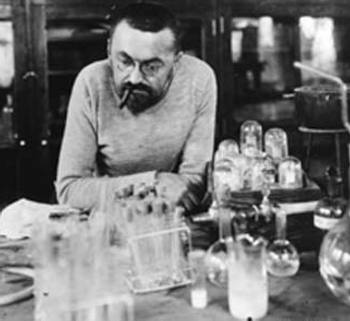
The idea that they were building a corporate America was very deliberate in the minds of GE’s senior management. One of the most powerful men at GE, Charles Proteus Steinmetz, sincerely believed that corporate functionaries should replace America’s elected national government. Cigar-chomping Steinmetz, who kept six alligators as pets at his home in Schenectady, thought that re-organizing America along the lines of a corporation would rid us of illogical politicians.
But today, all those things are available without the grid. The latest inverters, renewable energy sources, and rainwater- capture systems can provide for our needs. As the country prepares to spend the hundreds of billions to upgrade the grid and transform it into the “smart grid,” it is worth reminding ourselves how we came to build the grid in the first place.
The idea of power and water utilities as models of probity is one that, of course, they have steadily projected over the years.
The power companies have a privileged monopoly position, and with that kind of a license to print money, the assumption has been that they would have no reason to abuse it. Yet they do abuse it and they always have.
The growth of General Electric, and to a lesser extent Westinghouse, is a profound case study in the changing ways of American business, an early example of what economic historians call “managerial capitalism” superseding traditional “family capitalism,” exemplified by the businesses run by the Rockefellers and the Morgans. The new-style corporations were run by managers who were not significant shareholders in the business, and companies such as GE were both vertically and horizontally integrated—i.e., they controlled every aspect of production, distribution, sale, and aftercare of the product, all the way from raw materials (in this case electricity and the machinery neededto produce it) to the use of the appliance in the customer’s house.
The idea that they were building a corporate America was very deliberate in the minds of GE’s senior management. One of the most powerful men at GE, Charles Proteus Steinmetz, sincerely believed that corporate functionaries should replace America’s elected national government. Cigar-chomping Steinmetz, who kept six alligators as pets at his home in Schenectady, thought that re-organizing America along the lines of a corporation would rid us of illogical politicians.
It must have seemed like a brave new world at the time, a meritocracy being established and a new rational order replacing the semifeudal era of robber barons such as the Rockefellers.
Not only was GE organized along the inhuman lines satirized in Metropolis, Fritz Lang’s film about the drudgery of life in a mechanized city; the product it created—electricity—enabled other megacorporations to do the same.
Historian David Nye, in his book Electrifying America, says the grid was not built to help the consumer, nor to give communities more control over their own lives, nor necessarily to guarantee a more reliable flow of energy—that was a by-product. The grid came into existence to optimize efficiency (and hence profitability) for the producer. Society has organized itself around this approach to business ever since, and in doing so, I believe, has tied itself in knots.
In the early days of electricity, as in the early days of the auto and other industries, there were many competing standards. Hundreds of equipment manufacturers and thousands of small utilities operated on a myriad of voltages and delivery systems, and this was highly irrational and ineffi cient, meaning it ran contrary the spirit of the age.
Not only was GE organized along the inhuman lines satirized in Metropolis, Fritz Lang’s film about the drudgery of life in a mechanized city; the product it created—electricity—enabled other megacorporations to do the same.
Historian David Nye, in his book Electrifying America, says the grid was not built to help the consumer, nor to give communities more control over their own lives, nor necessarily to guarantee a more reliable flow of energy—that was a by-product. The grid came into existence to optimize efficiency (and hence profitability) for the producer. Society has organized itself around this approach to business ever since, and in doing so, I believe, has tied itself in knots.
In the early days of electricity, as in the early days of the auto and other industries, there were many competing standards. Hundreds of equipment manufacturers and thousands of small utilities operated on a myriad of voltages and delivery systems, and this was highly irrational and ineffi cient, meaning it ran contrary the spirit of the age.
The key event in the early history of the grid was the day that Thomas Edison installed the first electricity meter. His first central generator had gone into action on Pearl Street in Manhattan in 1882, and Edison began by charging his customers on Wall Street according to the number of lights in their buildings. That meant he was highly incentivised to make his system as efficient as possible in its consumption of both fuel and electricity. No matter that his incandescent lamp turned only ten percent of the electricity into light, with ninety percent wasted as heat. This inefficiency would have been solved were it not for the introduction of the electricity meter. Once he changed his business model, introduced meters, and charged for the electricity rather than the light, Edison had no reason to develop more efficient bulbs. And unnoticed, the metered supply became the standard way of delivering electricity around the Western world.
Agreement on standards did not inevitably lead to an industry dominated by one or two very large companies. This happened, of course, but commercial factors were what decided it, as best exemplified by the rise of GE.
Once GE established its control over the utilities industry through its dominance of the market in power generation, it turned to controlling the electric lightbulb market, which it did largely through overtly manipulative practices. I find this particularly revealing because GE is very proud of its illustrious past, referring to it all the time. In a July 2009 speech launching its smart-grid strategy, the president of the lighting and appliance division told his audience of journalists, by way of introduction, “In the first half of the twentieth century, [GE] produced one of the world’s best home-appliance businesses.”
The mechanisms by which GE developed this world-beating business model illustrate neatly how the growth of the grid and the growth of the amoral corporation went hand in hand. Most homeowners were not interested in the many fancy appliances on view in the futuristic showrooms set up by the power companies from 1910 onward. But there was one thing they all wanted: electric light. And that was motivation enough to have power lines brought into their homes. The company selling most of the lightbulbs was GE, which owned the patents thanks to the company’s founder, Thomas Edison. By 1911, GE controlled seventy percent of the U.S. lightbulb market—a much higher figure than the number that offi cially established it as a monopoly under the Sherman Antitrust Act of 1890. How did the company achieve this? Simple: It secretly owned another company called National Electric Lamp Company, and through National it bought up its eighteen largest competitors. To keep up the pretense GE even sued National in 1904, for patent infringement. It was all a sham; GE was suing itself. And yet, even when this sham was discovered, GE managed to hold on to its two hundred lightbulb patents and, thus, controlof the market.
In the great economic slump of the 1930s, GE’s sales declined along with everyone else’s, but its control of the lightbulb market saw it through the Depression just fi ne. Even in its worst year, 1933, the lightbulb division made a small profi t. Electric light had become the one thing nobody wanted to be without.
There was genuine demand for lightbulbs, which can’t be said of the appliances on offer. Its lightbulb business is just a small-scale representation of the way GE conducted itself through the first few decades of
electrification. There were fifteen sizable electric companies in the early 1880s, according to Nye. By 1893 there were just two—GE and Westinghouse—and it was GE that went on to shape America.
The first step in building a company like GE or Westinghouse, after pooling patents to better control the market and to avoid costly legal battles over similar patents, is to acquire any smaller regional companies in order to reduce competition and create larger, homogenous markets for greater economies of scale.
From the dawn of the age of electricity, both GE and Westinghouse manufactured the expensive generating equipment that enabled local utility companies to produce power. GE was often paid in stock by these utility companies, and so ended up owning strategic stakes in most of them. Eventually GE created a holding company, the Electric Bond and Share Company, that would control the generating companies. By June 1929, the utility companies were the hottest category of stocks, i.e., among
the most overpriced.
Agreement on standards did not inevitably lead to an industry dominated by one or two very large companies. This happened, of course, but commercial factors were what decided it, as best exemplified by the rise of GE.
Once GE established its control over the utilities industry through its dominance of the market in power generation, it turned to controlling the electric lightbulb market, which it did largely through overtly manipulative practices. I find this particularly revealing because GE is very proud of its illustrious past, referring to it all the time. In a July 2009 speech launching its smart-grid strategy, the president of the lighting and appliance division told his audience of journalists, by way of introduction, “In the first half of the twentieth century, [GE] produced one of the world’s best home-appliance businesses.”
The mechanisms by which GE developed this world-beating business model illustrate neatly how the growth of the grid and the growth of the amoral corporation went hand in hand. Most homeowners were not interested in the many fancy appliances on view in the futuristic showrooms set up by the power companies from 1910 onward. But there was one thing they all wanted: electric light. And that was motivation enough to have power lines brought into their homes. The company selling most of the lightbulbs was GE, which owned the patents thanks to the company’s founder, Thomas Edison. By 1911, GE controlled seventy percent of the U.S. lightbulb market—a much higher figure than the number that offi cially established it as a monopoly under the Sherman Antitrust Act of 1890. How did the company achieve this? Simple: It secretly owned another company called National Electric Lamp Company, and through National it bought up its eighteen largest competitors. To keep up the pretense GE even sued National in 1904, for patent infringement. It was all a sham; GE was suing itself. And yet, even when this sham was discovered, GE managed to hold on to its two hundred lightbulb patents and, thus, controlof the market.
In the great economic slump of the 1930s, GE’s sales declined along with everyone else’s, but its control of the lightbulb market saw it through the Depression just fi ne. Even in its worst year, 1933, the lightbulb division made a small profi t. Electric light had become the one thing nobody wanted to be without.
There was genuine demand for lightbulbs, which can’t be said of the appliances on offer. Its lightbulb business is just a small-scale representation of the way GE conducted itself through the first few decades of
electrification. There were fifteen sizable electric companies in the early 1880s, according to Nye. By 1893 there were just two—GE and Westinghouse—and it was GE that went on to shape America.
The first step in building a company like GE or Westinghouse, after pooling patents to better control the market and to avoid costly legal battles over similar patents, is to acquire any smaller regional companies in order to reduce competition and create larger, homogenous markets for greater economies of scale.
From the dawn of the age of electricity, both GE and Westinghouse manufactured the expensive generating equipment that enabled local utility companies to produce power. GE was often paid in stock by these utility companies, and so ended up owning strategic stakes in most of them. Eventually GE created a holding company, the Electric Bond and Share Company, that would control the generating companies. By June 1929, the utility companies were the hottest category of stocks, i.e., among
the most overpriced.
After the First World War, GE’s position as the industry’s leader was unassailable, and throughout the 1920s, the company had a new strategic objective: “The creation and fostering throughout America of a positive electrical consciousness.” In that single decade, GE, working with and through a trade association called the National Electric Light Association (NELA, the forerunner of the Edison Electric Institute), transformed America. The headquarters of GE Lighting is still at Nela Park, East Cleveland, Ohio.
The annual meeting of NELA in 1923 was the venue for the launch of the proposed national grid. “One vast power system for whole country projected,” declared the New York Times on July 17, 1923, in a breathless preamble to a front-page report from the conference by none other than the chairman of Westinghouse, Brigadier General Guy Tripp. There were two competing schemes at the time—the utilities favored one called Super Power; their opponents, largely municipalities, were pushing Giant Power, which would limit the influence of the utilities.
Both factions agreed, however, that a national grid was needed. “The only reason for the existence of such a system,” wrote Tripp, “is that it will increase the welfare of the people served by it.” Really?
In retrospect it would have been right to be cynical about this claim. Although the decision to create a pro-electric culture in America was a very conscious one, nobody realized quite how conscious until the late 1920s, when a Federal Trade Commission inquiry into NELA revealed the exact level of manipulation and the large propaganda budget devoted to persuading households to go on the grid.
Spending up to a million dollars a year through the 1920s, NELA secretly funded news agencies, sponsored research, held conferences, endowed scholarship funds, organized letterwriting campaigns, and even encouraged the rewriting of school textbooks. In 1925, for example, the chairman of the NELA PR committee, M. S. Sloan, of the Brooklyn Edison Company, addressed a group of employees at an internal meeting: “Schoolbooks in wide use all over the country have recently been analyzed. Many of them contain startling misstatements about public utilities. The pupil studying such material, hearing it discussed in the classroom, starts life with a warped and biased point of view regarding public utilities, and . . . is only too likely to remain unsympathetic and antagonistic through all future years.”
The annual meeting of NELA in 1923 was the venue for the launch of the proposed national grid. “One vast power system for whole country projected,” declared the New York Times on July 17, 1923, in a breathless preamble to a front-page report from the conference by none other than the chairman of Westinghouse, Brigadier General Guy Tripp. There were two competing schemes at the time—the utilities favored one called Super Power; their opponents, largely municipalities, were pushing Giant Power, which would limit the influence of the utilities.
Both factions agreed, however, that a national grid was needed. “The only reason for the existence of such a system,” wrote Tripp, “is that it will increase the welfare of the people served by it.” Really?
In retrospect it would have been right to be cynical about this claim. Although the decision to create a pro-electric culture in America was a very conscious one, nobody realized quite how conscious until the late 1920s, when a Federal Trade Commission inquiry into NELA revealed the exact level of manipulation and the large propaganda budget devoted to persuading households to go on the grid.
Spending up to a million dollars a year through the 1920s, NELA secretly funded news agencies, sponsored research, held conferences, endowed scholarship funds, organized letterwriting campaigns, and even encouraged the rewriting of school textbooks. In 1925, for example, the chairman of the NELA PR committee, M. S. Sloan, of the Brooklyn Edison Company, addressed a group of employees at an internal meeting: “Schoolbooks in wide use all over the country have recently been analyzed. Many of them contain startling misstatements about public utilities. The pupil studying such material, hearing it discussed in the classroom, starts life with a warped and biased point of view regarding public utilities, and . . . is only too likely to remain unsympathetic and antagonistic through all future years.”
This must be what happened to me.
As another example, in Illinois, a release was regularly sent to the nine hundred newspapers in the state, about 150 of them dailies. Speakers’ bulletins were issued to employees, containing “ample material to any intelligent person for sound talks on each subject.”
NELA also acted as a booking agency for its propagandists. According to an internal memo, “A bureau is operated to find engagements, before clubs, civic associations and so on. More than 800 Illinois high schools are regularly furnished informative literature for classroom theme work, and debating society use.”
In the slump of the thirties, with sales of everything else falling, electrification of homes and businesses continued to grow. There are echoes of this now, with the multi-corporation propaganda campaigns promoting the creation of a smart grid in the middle of the worst economic downturn in twenty years.
In 1935 (the only year for which I could f nd figures), lightbulbs were still by far the biggest power user in the domestic setting. Of the 20 million households wired to the grid by then, 13.5 million used electricity for lighting and small appliances, such as radios, while only 5 million had a refrigerator, and about 1.5 million had electric stoves.
Since the early stages of the grid, GE had been working hard to increase their sales of products other than lightbulbs. Merely running a few lights per household did not require the huge central generators that GE was building, nor did it require the elaborate power grid that was being planned. Things could have proceeded very differently. Just as today the smart grid is hardly inevitable and not necessarily in the consumers’ interests, back then the grid was not the only logical conclusion and not the best solution for the market. “It could have been a much less centralized system, even balkanized,” David Nye told me. If the opposition had been better organized, or the pro-electricity lobby had not been so well funded, or if a man named Bruce Fairchild Barton had not come along when he did, the grid might never have formed.
Barton’s advertising agency was hired in 1922 by GE. The young adman’s assignment was to raise the “electrical consciousness” of the average housewife, who made the purchasing decisions about refrigerators, stoves, and washing machines.
For the first twenty-five years of Barton’s life, his father had been pastor of the First Congregational Church of Oak Park, Illinois. The standard biography recounts that at the age of nine Barton had marketed his uncle’s homemade maple syrup so successfully that the man was forced to buy extra supplies from neighbors in order to meet demand.
Barton graduated from Amherst College in 1907, and was voted most likely to succeed in his class. He did not, however, succeed much at first. He was hired to edit a succession of magazines, but they all suffered under his leadership. One was Housekeeper, a publication targeted at what were by then called housewives. So by the time he entered advertising, Barton was a deeply conventional—and religious—man who thoroughly understood housewives, and he felt that salesmanship was his calling. Years later, he wrote a book about Jesus, The Man Nobody Knows. It made the argument that Jesus was “the world’s greatest salesman.” He also wrote hundreds of articles for popular magazines, offering readers advice and inspiration for pursuing the American dream. Barton may have even seen himself as a modern Jesus figure, with electricity in the same miraculous role as the loaves of bread and fi sh, destined to feed, warm, and clothe so many for so little.
NELA also acted as a booking agency for its propagandists. According to an internal memo, “A bureau is operated to find engagements, before clubs, civic associations and so on. More than 800 Illinois high schools are regularly furnished informative literature for classroom theme work, and debating society use.”
In the slump of the thirties, with sales of everything else falling, electrification of homes and businesses continued to grow. There are echoes of this now, with the multi-corporation propaganda campaigns promoting the creation of a smart grid in the middle of the worst economic downturn in twenty years.
In 1935 (the only year for which I could f nd figures), lightbulbs were still by far the biggest power user in the domestic setting. Of the 20 million households wired to the grid by then, 13.5 million used electricity for lighting and small appliances, such as radios, while only 5 million had a refrigerator, and about 1.5 million had electric stoves.
Since the early stages of the grid, GE had been working hard to increase their sales of products other than lightbulbs. Merely running a few lights per household did not require the huge central generators that GE was building, nor did it require the elaborate power grid that was being planned. Things could have proceeded very differently. Just as today the smart grid is hardly inevitable and not necessarily in the consumers’ interests, back then the grid was not the only logical conclusion and not the best solution for the market. “It could have been a much less centralized system, even balkanized,” David Nye told me. If the opposition had been better organized, or the pro-electricity lobby had not been so well funded, or if a man named Bruce Fairchild Barton had not come along when he did, the grid might never have formed.
Barton’s advertising agency was hired in 1922 by GE. The young adman’s assignment was to raise the “electrical consciousness” of the average housewife, who made the purchasing decisions about refrigerators, stoves, and washing machines.
For the first twenty-five years of Barton’s life, his father had been pastor of the First Congregational Church of Oak Park, Illinois. The standard biography recounts that at the age of nine Barton had marketed his uncle’s homemade maple syrup so successfully that the man was forced to buy extra supplies from neighbors in order to meet demand.
Barton graduated from Amherst College in 1907, and was voted most likely to succeed in his class. He did not, however, succeed much at first. He was hired to edit a succession of magazines, but they all suffered under his leadership. One was Housekeeper, a publication targeted at what were by then called housewives. So by the time he entered advertising, Barton was a deeply conventional—and religious—man who thoroughly understood housewives, and he felt that salesmanship was his calling. Years later, he wrote a book about Jesus, The Man Nobody Knows. It made the argument that Jesus was “the world’s greatest salesman.” He also wrote hundreds of articles for popular magazines, offering readers advice and inspiration for pursuing the American dream. Barton may have even seen himself as a modern Jesus figure, with electricity in the same miraculous role as the loaves of bread and fi sh, destined to feed, warm, and clothe so many for so little.
Barton’s pro-electricity campaigns were relentless. During the 1920s, GE’s annual advertising budget increased from two million to twelve million dollars a year, and Barton ensured that each family would see two hundred ads per year, mainly in magazines. One typical campaign used the slogan “Make your house a home,” a phrase that has survived to this day. (Barton once said, “We build of imperishable materials, we who work with words.”) The campaign advocated wiring of the entire house, and the ads showed a series of tableaux of happy American families sitting together, surrounded by electrical devices.
Barton is also credited with placing the GE logo, with its scroll lettering, at the center of the marketing strategy, ensuring it was used so often that housewives thought of it as the “initials of a friend.”
Barton is also credited with placing the GE logo, with its scroll lettering, at the center of the marketing strategy, ensuring it was used so often that housewives thought of it as the “initials of a friend.”
Historian Stuart Ewen spotted that GE’s advertising copywriters employed the rhetoric of women’s emancipation to sex up appeals for domestic consumption: vacuum cleaners gave women “new life”; toasters made them “free.” Rural housewives were a special target because they were the marketing route into the electrification of farms, which was stubbornly resisted for decades.
Most of the media went along with GE, not least to get a share of the advertising revenue. But there were a few voices raised against these tactics. The editor of Woman’s Home Companion, Gertrude Battles Lane, who built the magazine’s circulation up from 750,000 when she took over in 1912 to more than 3.5 million, feared that individual labor-saving devices were fragmenting communities. She ran a long campaign for “cooperative housework,” arguing that the effect of the washing machine in the home (for the minority who could afford it) was to make the housewife more of a drudge than before. One article, “The Revolt of Mother,” argued that “apart from the fact that millions of us are not able to command them, the washing machine won’t collect and sort the laundry, or hang out the clothes; the mangle won’t iron complicated articles; the dishwasher won’t collect, scrape, and stack the dishes; the vacuum cleaner won’t mop the floor or clean up and put away.” Howes stressed the importance of the local community and the employment of domestic staff.
Most of the media went along with GE, not least to get a share of the advertising revenue. But there were a few voices raised against these tactics. The editor of Woman’s Home Companion, Gertrude Battles Lane, who built the magazine’s circulation up from 750,000 when she took over in 1912 to more than 3.5 million, feared that individual labor-saving devices were fragmenting communities. She ran a long campaign for “cooperative housework,” arguing that the effect of the washing machine in the home (for the minority who could afford it) was to make the housewife more of a drudge than before. One article, “The Revolt of Mother,” argued that “apart from the fact that millions of us are not able to command them, the washing machine won’t collect and sort the laundry, or hang out the clothes; the mangle won’t iron complicated articles; the dishwasher won’t collect, scrape, and stack the dishes; the vacuum cleaner won’t mop the floor or clean up and put away.” Howes stressed the importance of the local community and the employment of domestic staff.
END OF EXCERPT