
Dow’s chemical home – its green, but is it toxic?

Lucy Williams
May 23, 2010
Dow’s chemical home – its green, but is it toxic?

Dream home from Dow

Midland 21 May — The Dow Chemical Co. has launched a show-home that it contends will eliminate utility bills, but at what price?

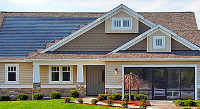
The 3,400-square-foot “Vision Zero” home in Bay City, Mi will produce as much energy as it consumes – using Dow Chemicals products, from Styrofoam to insulate the basement to Powerhouse Solar Shingles to generate solar power on the roof.  But the effect on health has not  been measured by the company.
The house uses 60 to 70 percent less energy than a conventional home by altering its insulation, electric and water systems and parts of its interior — from electronics such as televisions and computers to flooring and paint, Dow officials said.
“You essentially have no utility bill for the life of that house,” said Jim Gurnee, marketing director at Dow Building Solutions, the division that partnered with Saginaw-based developer Cobblestone Homes.
The Vision Zero home uses a wide range of Dow materials and sustainable technologies, including next generation insulation and air-sealing products. The solar components on this home, which includes a demonstration of Dow’s solar shingle, are claimed to produce enough energy to supply all of this home’s electricity needs plus additional electricity that can be sold back to the local utility company for energy credits.
Cobblestone has also incorporated a wide range of products from a number of other leading suppliers that will conserve energy or harness renewable resources to keep the Vision Zero home comfortable, while meeting the zero-energy threshold. The house uses geothermal heat pumps to heat and cool the home, solar water heating systems to provide hot water, as well as LED light bulbs and ultra-high efficiency appliances that can be found throughout the house. When you combine the energy efficient insulation materials, energy saving appliances, geothermal energy, and solar power, you get a net-zero energy home – a home that essentially sustains itself.
Dow has moved beyond its original household products, including Ziploc bags and Saran wrap, to serve the comprehensive needs of homeowners, Liveris said.
The company will do this in the Vision Zero home by using Thermax, Weathermate, Froth-Pak, Safetouch and Great Stuff Pro to insulate walls and floors. To help with temperature control, Dowfrost provides heat transfer fluid to extract heat or coolness from the ground.
Gurnee declined to say what the house is expected to cost but said that it is “affordable.”
The house will be used initially as a training facility and a museum for educating builders and the public about energy conservation and Dow products. It will likely be put up for sale next year, Dow officials said.
The Vision Zero home can be built for any climate and has received interest from DTE Energy, which inquired about replicating the project in Detroit, said Melissa Wahl, who owns Cobblestone with her husband Mark.

Midland 21 May — The Dow Chemical Co. has launched a show-home that it contends will eliminate utility bills.
The 3,400-square-foot “Vision Zero” home in Bay City will produce as much energy as it consumes using Dow products, from Styrofoam to insulate the basement to Powerhouse Solar Shingles to generate solar power on the roof.
The house uses 60 to 70 percent less energy than a conventional home by altering its insulation, electric and water systems and parts of its interior — from electronics such as televisions and computers to flooring and paint, Dow officials said.
“You essentially have no utility bill for the life of that house,” said Jim Gurnee, marketing director at Dow Building Solutions, the division that partnered with Saginaw-based developer Cobblestone Homes.
The Vision Zero home uses a wide range of Dow materials and sustainable technologies, including next generation insulation and air-sealing products, and the revolutionary new Solar Shingles. The solar components on this home, which includes a demonstration of Dow’s solar shingle, will produce enough energy to supply all of this home’s electricity needs plus additional electricity that can be sold back to the local utility company for energy credits.
Cobblestone has also incorporated a wide range of products from a number of other leading suppliers that will conserve energy or harness renewable resources to keep the Vision Zero home comfortable, while meeting the zero-energy threshold. The house uses geothermal heat pumps to heat and cool the home, solar water heating systems to provide hot water, as well as LED light bulbs and ultra-high efficiency appliances that can be found throughout the house. When you combine the energy efficient insulation materials, energy saving appliances, geothermal energy, and solar power, you get a net-zero energy home – a home that essentially sustains itself.
Dow has moved beyond its original household products, including Ziploc bags and Saran wrap, to serve the comprehensive needs of homeowners, Liveris said.
The company will do this in the Vision Zero home by using Thermax, Weathermate, Froth-Pak, Safetouch and Great Stuff Pro to insulate walls and floors. To help with temperature control, Dowfrost provides heat transfer fluid to extract heat or coolness from the ground.
Gurnee declined to say what the house is expected to cost but said that it is “affordable.”
The house will be used initially as a training facility and a museum for educating builders and the public about energy conservation and Dow products. It will likely be put up for sale next year, Dow officials said.
The Vision Zero home can be built for any climate and has received interest from DTE Energy, which inquired about replicating the project in Detroit, said Melissa Wahl, who owns Cobblestone with her husband Mark.

Dow’s chemical home – its green, but is it toxic? | Off-Grid.net