
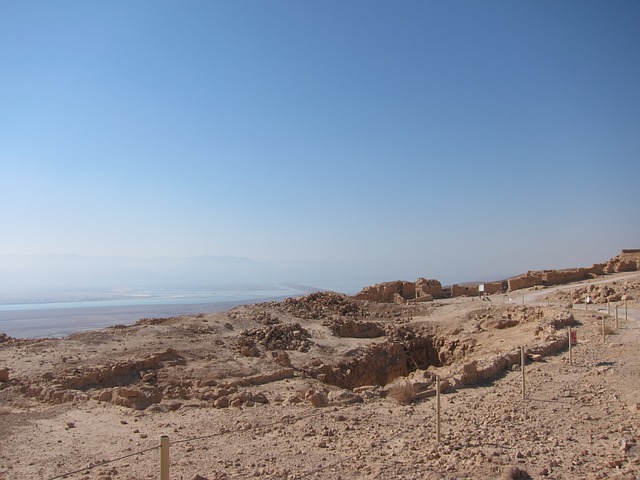
An off-grid desert village in Kibbutz Ketura, Israel is being used as a platform for tech companies and entrepreneurs to develop innovative off-grid technologies. The village was set up in 2014 via a collaboration between the Arava Institute for Environmental Studies and Eilat-Eilot Renewable Energy Initiative. The project is aimed at developing off-grid solutions for undeveloped areas, encouraging experimentation. It is the key step between development and implementation in areas where whole communities have no grid access.
Desert Village Building:
There are three types of structure in the village, based on existing building types within in off-grid communities. The rural structure is based on a traditional design and has a thatched roof to help with ventilation, but lacks natural light. Therefore, to adapt it, the village has added windows to the buildings to provide natural light for reading and other activities, as well as providing more ventilation.
Energy:
The desert village has some different energy technologies within its boundaries. The Kalipack solar suitcase can produce energy from three sources – electricity, a vehicle or solar power. Storage takes the form of a lithium ion battery and can power a small refrigerator, laptop or lighting, amongst other things. The village also has a small domestic biogas system which has efficient waste disposal whilst producing methane gas for cooking, water heating and home lighting.
Water:
Clearly something that is very important in every community is clean water. The desert village has a solar water distillation system developed by SunDwater. This technology converts contaminated water to drinkable clean water through a process of concentrated radiation, requiring no external energy source. Plus, it’s completely green and eco-friendly. NUFiltration have also developed a water purifier unit in the desert village which provides waste water treatment. Once again, easy to use, requires no electricity and produces 500 litres of clean water per hour. There’s also no maintenance or spare parts required as it’s all done using man power! The village also has a solar powered water pumping system for agriculture and farming.
Food:
We all need fuel and that means food! The village has a hydroponics system developed called the LivingBox. These modular units are like Lego, therefore they can be fitted together and remodelled to suit different needs. They can grow a wide variety of fruit and veg and save up to 80% of water that would be used in other techniques. Solar ovens and cookers are used for cooking food. Plus, an energy generating pot has been developed which produces electricity from a heat source. The pot can then be used as a charging point for phones and other devices.