
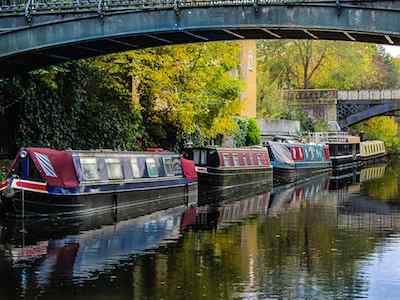
Firstly, it’s not as easy as just buying a boat, finding some water and setting up camp for the next 30 years. Everyone using canals and waterways needs to have a boat licence, an up-to-date boat safety check and valid insurance. Once that’s all done, you then you have two choices of lifestyle. You can either get a resident mooring, which enables you to stay in one area for as long as you like. A permanent mooring is ideal if you don’t want to move around, but can be expensive and hard to come by. While a mooring of this type can be had for around £6,000 annually in less popular areas, staying somewhere like the Docklands or Islington will cost over £20,000 a year.
The other option is to cruise continuously – in which case all you need is the boat licence, which ranges from £510.62 to £1,110.32 annually, depending on the size of your boat. Boats are allowed to moor almost anywhere alongside canal towpaths. The main rule with this type of lifestyle is that you need to be moving at least every 14 days and can’t go back and forth between two spots. The recommended cruising range is at least 20 miles a year. It isn’t the most secure way of living, but it has to be done this way to consider all ‘liveaboards’.
A spokesperson for the Canal & River Trust, Fran Read, says the stretch of east London encompassing Victoria Park, Hackney and Broadway Market is a particularly trendy area, attracting record numbers.
‘Boat living can be a fantastic way of life, which many people love, but it comes with its own challenges. It may take a whole day to move the boat and find a new mooring – you can end up in a queue behind others.
‘Sometimes people can get a bit of a shock, especially in winter, when they realise it’s not just a floating house. So we advise that you should only move aboard if you really love the lifestyle.’ Mooring on the tidal Thames is another challenge – there is much more demand than moorings available. You also need to be part of a licensed works with planning permission, such as a pier or jetty, with safe access 24/7. The houseboat needs to be connected safely for electricity, water, and sewage (discharging sewage into the river is illegal).
In addition, a residential mooring on the Thames requires a set of detailed consents, including local authority planning permission, consent from the riverside landowner and a Port of London Authority River Works licence.
By Chelsea Mendez